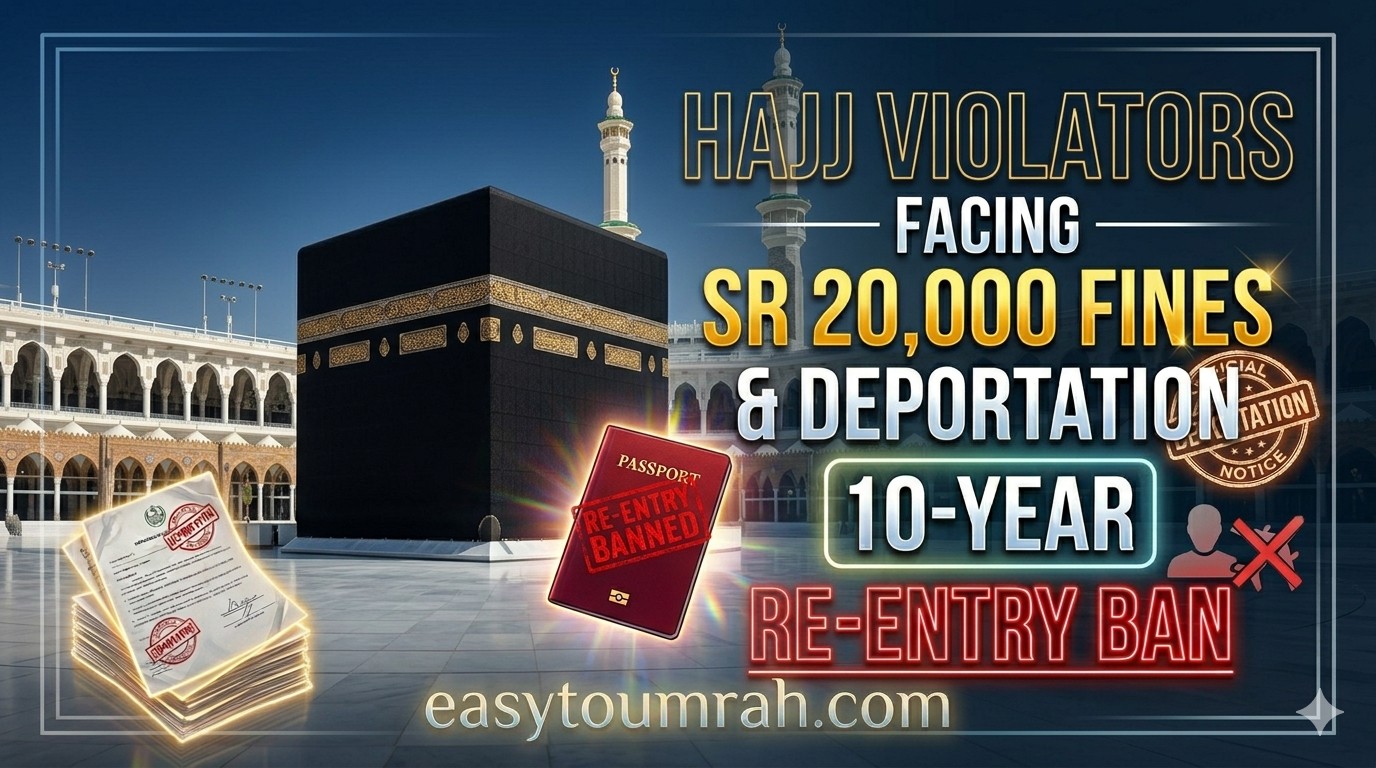
Hajj violators face SR20,000 fines, deportation and 10-year re-entry ban
How to Avoid Hajj Violations and Fines: A Complete Guide for Pilgrims
Introduction
Performing Hajj is one of the most sacred journeys in Islam, but many pilgrims unintentionally commit violations that can lead to heavy fines, penalties, or even deportation from Saudi Arabia. Understanding how to avoid Hajj violations and fines is essential for a smooth, spiritually rewarding, and legally compliant pilgrimage experience. From permit regulations and transportation rules to prohibited activities during Ihram, this guide covers everything pilgrims need to know before traveling for Hajj.
Why Understanding Hajj Rules Is Important
Every year, millions of Muslims gather in Makkah for Hajj. Due to the massive crowds and security concerns, Saudi authorities enforce strict regulations to ensure safety and organization.
Failing to follow these rules can result in:
- Financial penalties
- Hajj permit cancellation
- Deportation
- Travel bans
- Legal action
Pilgrims who prepare properly can avoid unnecessary stress and focus entirely on worship.
Common Hajj Violations and How to Avoid Them
1. Performing Hajj Without an Official Permit
One of the most serious violations is attempting Hajj without an authorized permit.
How to Avoid It
- Register only through approved Hajj operators.
- Verify your visa and permit status before traveling.
- Carry digital and printed copies of your documents at all times.
Possible Penalty
Saudi authorities often impose heavy fines and deportation penalties on individuals entering Hajj zones illegally.
2. Violating Ihram Restrictions
During Ihram, pilgrims must follow specific religious guidelines.
Common Ihram Violations
- Using perfume or scented products
- Cutting hair or nails
- Wearing stitched clothing for men
- Hunting animals
- Engaging in arguments or abusive behavior
Tips to Stay Compliant
- Pack Ihram-friendly toiletries.
- Read Ihram rules before departure.
- Ask your group guide whenever unsure.
3. Entering Restricted Areas Without Authorization
Certain areas during Hajj are restricted for security and crowd control purposes.
Safety Tips
- Follow official route instructions.
- Avoid unauthorized shortcuts.
- Stay with your Hajj group leader.
Saudi security teams actively monitor movement through checkpoints and surveillance systems.
4. Overstaying Your Visa
Some pilgrims remain after Hajj ends, which is considered a legal offense.
How to Prevent Visa Issues
- Check your visa expiry date carefully.
- Book return flights in advance.
- Avoid changing travel plans without approval.
Consequences
Overstaying may lead to:
- Daily fines
- Deportation
- Future visa restrictions
5. Carrying Prohibited Items
Saudi Arabia has strict customs laws.
Items to Avoid Bringing
- Illegal medicines
- Sharp objects
- Political material
- Unauthorized drones or cameras
Always review updated customs regulations before departure.
Essential Tips for a Safe and Legal Hajj Journey
Prepare Documents Early
Keep the following ready:
- Passport
- Hajj permit
- Visa copies
- Hotel booking confirmation
- Emergency contact list
Store backups digitally on your phone and email.
Follow Health and Vaccination Requirements
Saudi authorities usually require mandatory vaccinations for pilgrims.
Recommended Health Preparations
- Meningitis vaccine
- Seasonal flu vaccine
- COVID-19 guidelines if applicable
- Basic first-aid kit
Hydration and rest are equally important during the pilgrimage.
Stay Updated With Official Announcements
Rules can change every year.
Best Sources for Updates
- Official Saudi Hajj Ministry announcements
- Licensed Hajj travel agencies
- Embassy advisories
Avoid relying on unverified social media rumors.
Important Hajj Etiquette to Avoid Problems
Respect Crowd Management Rules
Large crowds increase the risk of accidents.
Pilgrim Etiquette Includes
- Avoid pushing or rushing
- Follow designated schedules
- Be patient during Tawaf and stoning rituals
Maintain Proper Conduct
Islam emphasizes discipline and respect during Hajj.
Avoid:
- Loud arguments
- Queue jumping
- Taking unauthorized photos
- Damaging public property
Good behavior reflects the true spirit of Hajj.
Statistics and Facts About Hajj Regulations
- Millions of pilgrims participate in Hajj annually in Makkah.
- Saudi authorities deploy thousands of security personnel every Hajj season.
- Digital permit systems are increasingly used to reduce unauthorized entry and overcrowding.
According to official Hajj authorities, strict permit enforcement significantly improves crowd safety and emergency response efficiency.
Expert Advice for First-Time Pilgrims
Travel With a Licensed Group
Experienced Hajj operators help pilgrims:
- Understand rituals
- Follow legal procedures
- Navigate transportation
- Avoid costly mistakes
Learn the Rituals Before Departure
Preparation reduces confusion and stress.
Helpful Preparation Methods
- Attend Hajj seminars
- Watch educational videos
- Read authentic Islamic guides
- Practice essential duas
People Also Ask (FAQs)
What happens if someone performs Hajj without a permit?
Individuals performing Hajj without a permit may face fines, deportation, and restrictions on future entry into Saudi Arabia.
Can pilgrims use mobile phones during Hajj?
Yes, mobile phones are allowed, but pilgrims should avoid disturbing others during prayers and rituals.
What are the most common Ihram mistakes?
The most common mistakes include using perfume, cutting nails, wearing prohibited clothing, and engaging in arguments.
Are there fines for overstaying after Hajj?
Yes, overstaying a visa can result in daily financial penalties, deportation, and future visa bans.
How can first-time pilgrims avoid Hajj violations?
First-time pilgrims should travel with licensed operators, study Hajj rituals beforehand, and follow official instructions carefully.
Conclusion
Understanding how to avoid Hajj violations and fines is crucial for every pilgrim planning this sacred journey. From obtaining valid permits to respecting Ihram rules and Saudi regulations, proper preparation ensures a peaceful and spiritually fulfilling Hajj experience.
Pilgrims who stay informed, organized, and patient can focus fully on worship without legal or financial complications.
Call to Action
Planning your Hajj journey soon? Share this guide with family and fellow pilgrims to help them stay safe, prepared, and compliant during Hajj. Leave a comment below with your questions or experiences, and subscribe for more Islamic travel and pilgrimage guides.
SEO Meta Details
Meta Title
Meta Description
Trending SEO Tags